Improve Operational Coordination Across Healthcare Workflows
Healthcare Operations Become More Complex Long Before They Become More Efficient
As practices grow, new providers join the organization, patient volumes increase, service lines expand, and operational complexity rises across intake, scheduling, documentation, billing, referrals, and care coordination.
To support that growth, organizations naturally adopt more systems and processes. Yet many discover that while individual systems perform their intended function, the work moving between them often becomes fragmented, manual, and difficult to manage.
Cadensoft helps healthcare organizations improve workflow coordination, reduce operational friction, and build systems that support more efficient, scalable healthcare operations.
Evaluate Your Healthcare Operations
Whether you’re evaluating workflow modernization, operational automation, AI initiatives, or platform development, we’ll help identify where opportunities for improvement can create measurable impact.
Most Healthcare Organizations Don't Need More Systems
Healthcare organizations have invested heavily in technology.
The challenge is rarely a lack of software.
Most organizations already possess:
- Patient data
- Operational systems
- Clinical workflows
- Reporting tools
- Communication platforms
Yet operational inefficiencies often persist.
Why?
Because the challenge is frequently not the systems themselves.
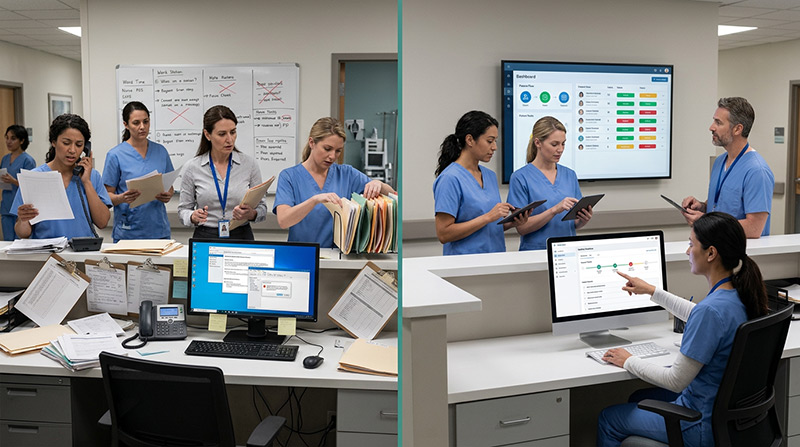
The challenge is how work moves between them.
Organizations often discover that information already exists but must be manually transferred.
Workflows already exist but require excessive coordination.
Processes already exist but lack visibility and consistency.
Adding more software does not automatically solve these challenges.
Improving how systems, workflows, and teams coordinate work often creates significantly greater value than simply adding additional technology.
The Reality of Growing Healthcare Organizations
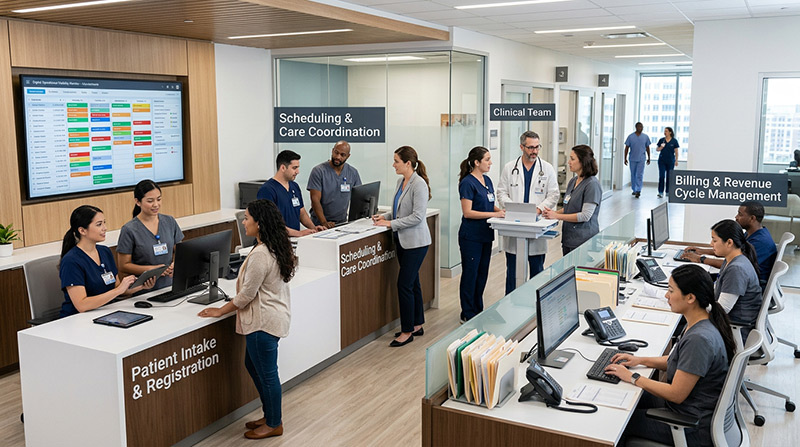
Healthcare operations become increasingly complex as organizations grow.
Additional providers, locations, specialties, services, and patients all contribute to operational demands that can quickly outpace the systems originally designed to support them.
To keep up with growth, organizations implement solutions intended to solve specific problems:
- Electronic Medical Records (EMRs)
- Practice Management Systems
- Patient Portals
- Scheduling Platforms
- Billing Solutions
- Reporting Tools
- Prior Authorization Systems
- Communication Platforms
Each system serves an important purpose.
The challenge emerges in how work moves between them.
Over time, healthcare organizations often find themselves relying on:
- Manual data entry
- Email-based coordination
- Spreadsheet tracking
- Disconnected workflows
- Staff workarounds
- Repetitive administrative tasks
to bridge operational gaps.
The result is an environment where administrative effort grows faster than operational efficiency.
Teams remain busy, yet visibility becomes harder to maintain.
Staff spend increasing amounts of time coordinating information rather than acting on it.
Leadership sees operational costs rise while scalability becomes more difficult to achieve.
The issue is rarely a single system.
The issue is often how work moves between them.
Where Operational Friction Commonly Appears
Patient Intake & Referral Management
The patient journey frequently begins long before the first appointment is scheduled.
Referrals arrive from multiple sources. Insurance information must be collected and validated. Medical records often need to be requested from outside providers. Intake documentation may arrive through portals, email, fax, or manual forms.
As volume increases, coordinating these activities becomes increasingly difficult.
Without structured workflows, organizations often experience:
- Delayed patient onboarding
- Incomplete documentation
- Scheduling bottlenecks
- Referral processing delays
- Inconsistent patient experiences
Improving intake coordination can have a meaningful impact on every downstream process within the organization.
Clinical Documentation & Information Flow
Clinical teams depend on accurate, accessible information to deliver effective patient care.
Documentation gaps, inconsistent data capture, and fragmented workflows frequently create administrative burden for providers and support staff.
Even minor disruptions in documentation workflows can affect:
- Scheduling
- Care coordination
- Billing
- Reporting
- Compliance activities
As healthcare organizations scale, improving how information moves between teams and systems becomes increasingly important.
Prior Authorization & Payer Coordination
Prior authorization remains one of the most time-consuming administrative functions in healthcare.
Information frequently moves between providers, staff, payers, and patients through a combination of portals, forms, phone calls, emails, and documentation workflows.
Many organizations struggle with:
- Status visibility
- Approval delays
- Documentation requirements
- Communication bottlenecks
Structured workflows and improved operational visibility can significantly reduce administrative effort while improving coordination.
Revenue Cycle Coordination
Revenue cycle performance depends on the quality of information generated throughout the patient journey.
Documentation gaps, workflow delays, scheduling issues, and authorization challenges often create downstream billing inefficiencies.
Many organizations discover that revenue cycle issues originate long before claims are submitted.
Improving workflow coordination upstream frequently produces meaningful improvements downstream.
Patient Communication & Care Coordination
Patients increasingly expect timely, consistent communication throughout their care journey.
Organizations often rely on multiple systems and communication channels to coordinate appointments, reminders, follow-up care, and patient engagement.
Without structured processes, communication becomes difficult to manage and visibility becomes limited.
This can impact both operational performance and patient experience.
How Cadensoft Helps Healthcare Organizations
Operational Workflow Coordination
We help healthcare organizations evaluate how operational work moves across intake, scheduling, clinical operations, care coordination, billing, and administrative functions.
The objective is to improve consistency, reduce unnecessary effort, and support more scalable operations.
Workflow Automation & Applied AI
Automation and AI can create meaningful value when applied to clearly defined operational workflows.
We help organizations identify opportunities where technology can reduce administrative burden, improve consistency, and accelerate operational processes.
Examples include:
- Intelligent intake processing
- Document classification
- Workflow routing
- Operational summaries
- Decision-support systems
Healthcare Platforms & Operational Systems
When existing platforms cannot fully support operational objectives, custom healthcare applications and workflow systems can help bridge operational gaps.
These systems can improve:
- Workflow visibility
- Operational coordination
- Reporting
- Data accessibility
- Process consistency
Operational Visibility & Reporting
Healthcare leaders need visibility into how work moves through the organization.
We help create systems that provide greater transparency into operational performance, workflow bottlenecks, and improvement opportunities.
Better visibility supports better decision-making.
Modernization & Integration
Many healthcare organizations operate across a diverse ecosystem of platforms and technologies.
We help connect systems, improve data movement, and modernize workflows without requiring wholesale replacement of existing technology investments.
Common Healthcare Initiatives
Intake & Referral Modernization
Improve visibility and coordination across patient onboarding workflows.
Prior Authorization Support Systems
Reduce administrative burden through structured workflows and operational visibility.
Revenue Cycle Visibility
Improve coordination between clinical, administrative, and billing functions.
Care Coordination Platforms
Support more efficient communication and workflow management across teams.
AI-Assisted Documentation Processing
Transform unstructured information into actionable operational workflows.
Operational Reporting Systems
Improve transparency across workflows, departments, and organizational performance.
Healthcare Platform Development
Build specialized systems designed around unique operational requirements.
Workflow Automation Initiatives
Reduce repetitive administrative effort while improving consistency and scalability.
Healthcare Technology In Practice
HealthCare Solutions Group+
Cadensoft partnered with HealthCare Solutions Group+ to support the development of an operational healthcare platform focused on workflow coordination, operational visibility, and scalable process management.
The initiative focused on creating a stronger foundation for managing complex healthcare workflows while improving visibility across operational activities.
A3 Healthcare
Cadensoft supported the discovery and development of a DMAIC assessment platform designed to help healthcare organizations evaluate operational performance, identify opportunities for improvement, and support structured decision-making.
Additional Healthcare Initiatives
Our healthcare experience spans workflow modernization, operational automation, healthcare platform development, process optimization, reporting systems, and technology initiatives designed to improve operational performance across complex healthcare environments.
Build More Efficient Healthcare Operations
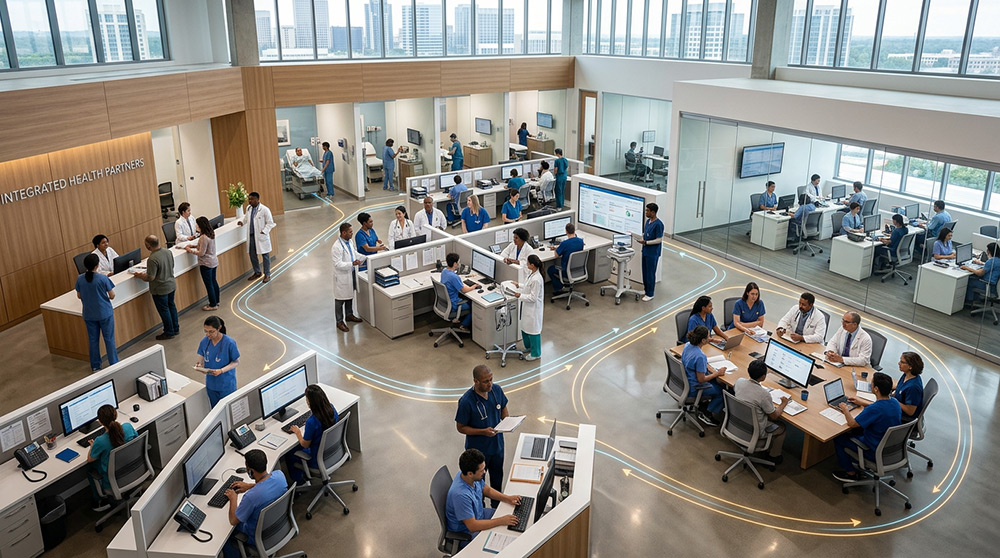
By improving workflow coordination, operational visibility, and system integration, organizations can reduce administrative burden, support scalability, and create more efficient operational environments.
Whether you’re exploring modernization, automation, AI, or custom healthcare platforms, we’ll help identify practical opportunities for improvement.